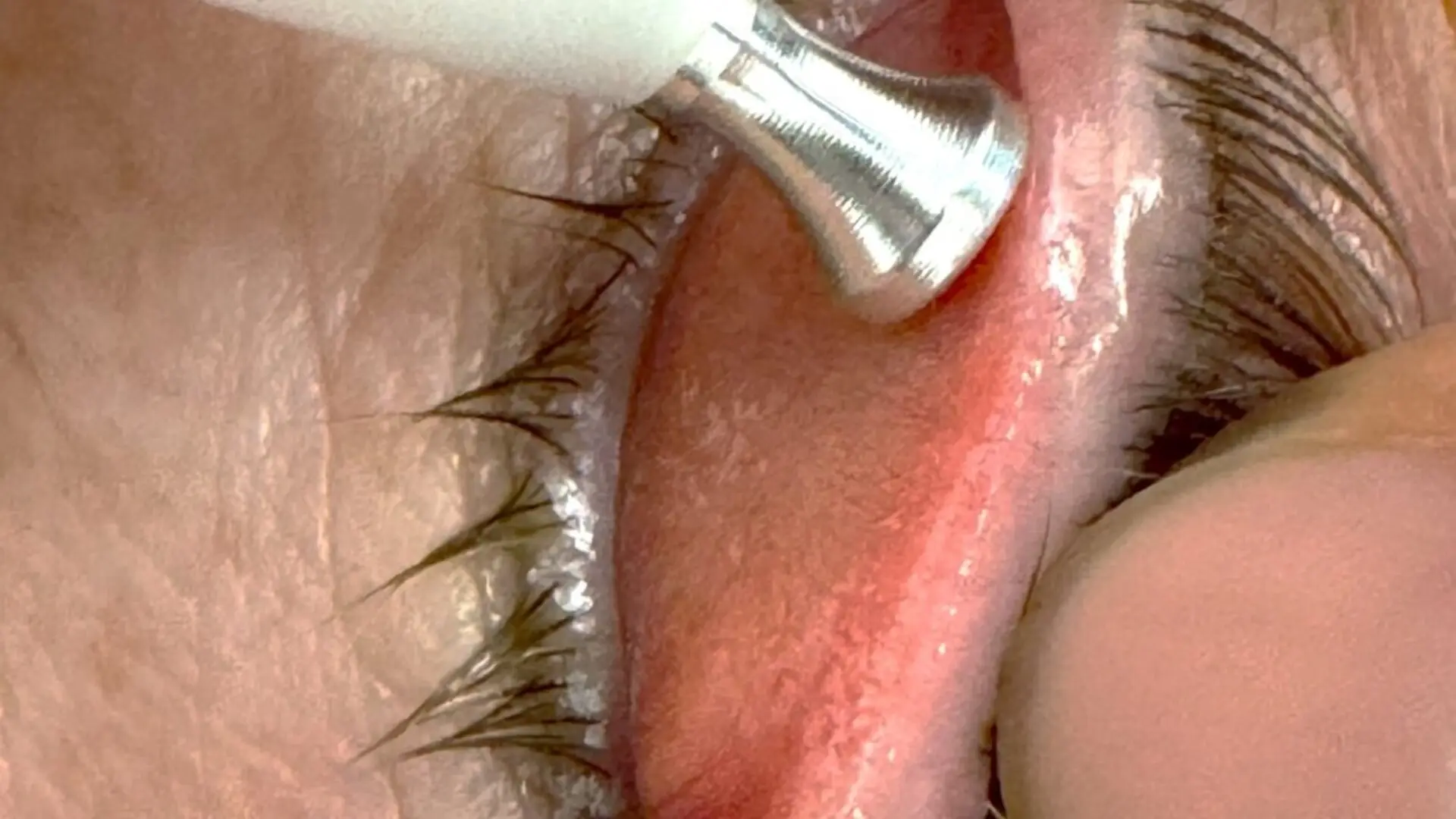
Electroporation-based therapy for dry eye disease relies on the delivery of brief, controlled high-voltage direct-current pulses that induce a transient, reversible increase in cell-membrane permeability.
How electroporation works
In ophthalmic plasma platforms, this phenomenon is described as reversible electroporation: direct current depolarizes cell membranes, temporarily overrides the membrane barrier, and may facilitate the movement of ions, water, and other small solutes across the tissue interface. The treatment is applied with a contact silver applicator to the tarsal conjunctiva, eyelid margin, and periocular skin, with the aim of modulating epithelial and glandular function while remaining non-ablative.
From a dry eye perspective, the proposed rationale is twofold. First, by acting on the lid margin and peri-meibomian tissues, electroporation/plasma treatment may help reduce the inflammatory burden of blepharitis, soften obstructive material at the gland orifices, and improve meibum outflow. Second, at the conjunctival and periocular level, transient changes in membrane polarity and permeability may enhance fluid exchange and support restoration of ocular surface homeostasis. These mechanisms remain only partially established, and the 2025 TFOS DEWS III Management and Therapy report classifies plasma treatment as an emerging modality for evaporative dry eye secondary to meibomian gland dysfunction, while noting that the available evidence is still limited.
Clinical Evidence
Clinically, electroporation-based treatment is positioned mainly for symptomatic evaporative dry eye associated with meibomian gland dysfunction, especially when lid-margin disease and gland obstruction coexist. In the prospective study reported by Rau and colleagues, patients underwent four weekly treatments, with improvements described in OSDI, tear break-up time, and meibography, whereas tear meniscus values did not change significantly. The manufacturer's ophthalmic instructions likewise describe a short contact procedure of approximately 8 minutes per eye, often completed with meibomian gland expression, and performed as a four-session weekly protocol.
In modern dry eye practice, electroporation should therefore be viewed not as a universal standalone solution, but as a promising adjunct within a multimodal Interventional Dry Eye strategy.
Its main strengths are its non-ablative profile, short treatment time, and compatibility with combination protocols. Its main limitation is that the supporting literature remains substantially smaller than that available for more established office-based treatments such as thermal pulsation and IPL.
- Dry eye disease with lid wiper epitheliopathy
- Dry eye disease with conjunctival lesions
- Severe ocular rosacea
- Dry eye disease with more than 75 percent meibomian gland atrophy
Electroporation indications as currently retained by Professor Pablo Dighiero in his own clinical practice. They describe a reasoned selection rather than a formal recommendation of the society, and remain subject to the manufacturer's instructions for use and to the practitioner's judgement.
