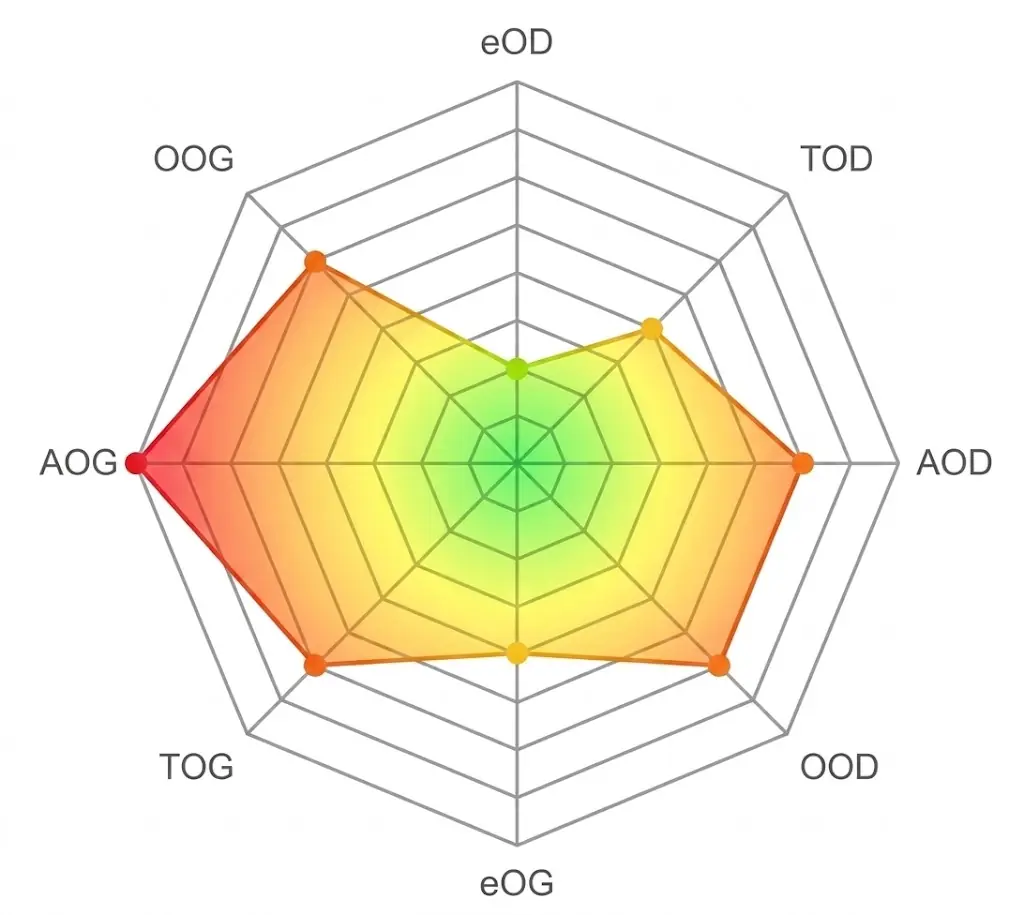
The eTAO Score
A structured scoring system integrating four clinical axes into a unified severity metric, guiding treatment selection and clinical decision-making.

eTAO Severity Score
The eTAO score integrates four clinical axes into a unified severity metric: corneal epithelium status, telangiectasia severity, meibomian gland atrophy, and gland obstruction. Each axis is graded 1 to 4, producing a composite profile that guides therapeutic decisions.
Normal tear film, no structural changes, no symptoms.
Intermittent symptoms, early tear instability. Environmental triggers.
Persistent symptoms, meibomian gland dysfunction, reduced TBUT.
Significant corneal involvement, marked inflammation, gland atrophy.
Refractory disease, advanced gland loss, multi-modal therapy required.
Two conditions for a targeted treatment
A therapeutic strategy is only as good as the assessment it rests on. The eTAO score exists to make that assessment reproducible from one examination to the next, and precise enough to point to the right combination of interventions.
eTAO Resources
Therapeutic Guide
Treatment protocols matched to eTAO components, connecting each clinical axis to the appropriate therapeutic strategy.
ExploreTreatment Decision Pathways
Three major pathways for selecting the best therapeutic option, each targeting a distinct mechanism in dry eye disease.
ExploreThe eTAO score bridges diagnosis and treatment
Each severity level maps to a specific therapeutic strategy, ensuring that treatment decisions are grounded in objective clinical data.
Explore Treatments