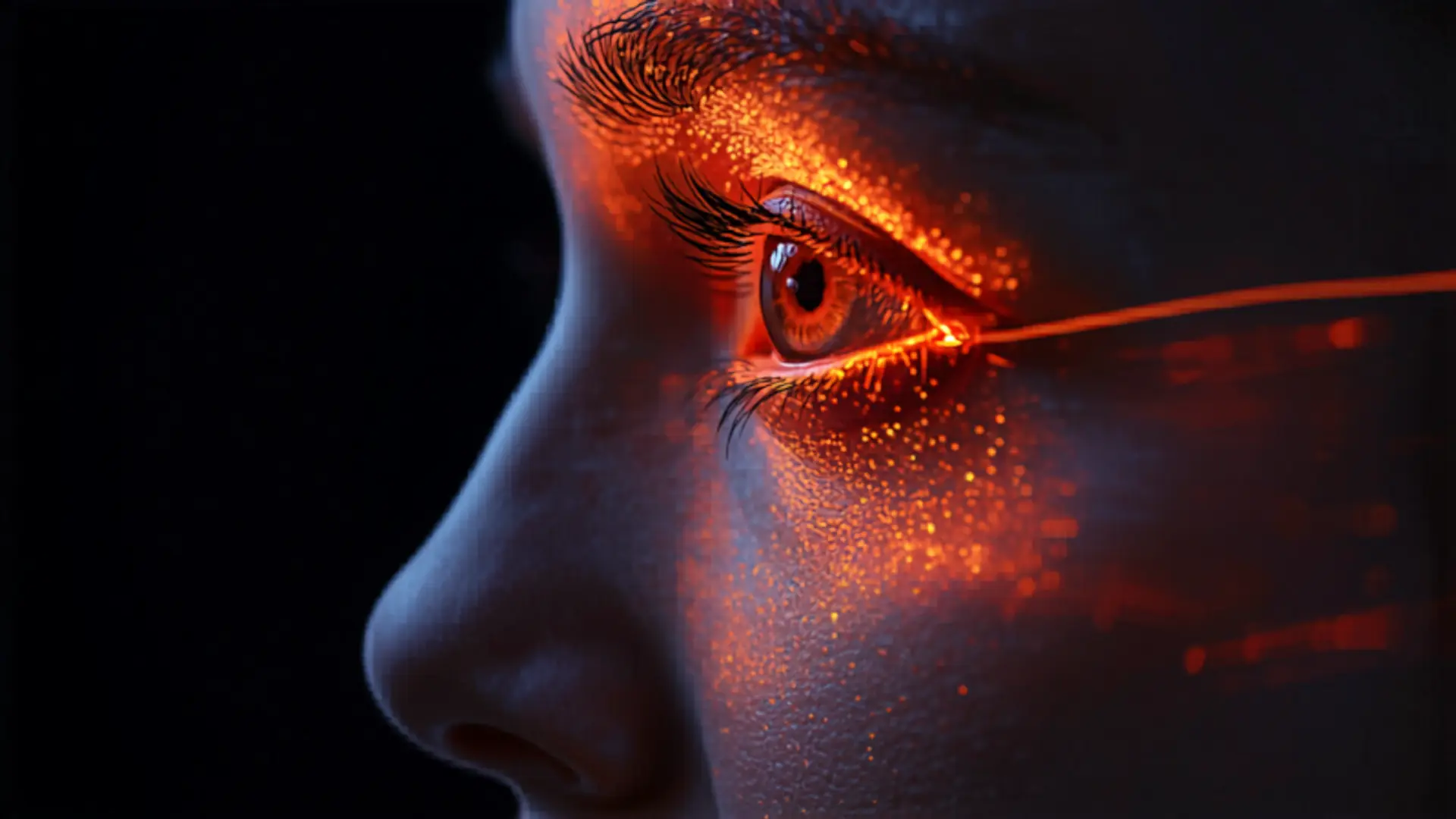
Intense pulsed light (IPL) uses a polychromatic light source emitted by a xenon lamp, covering a broad spectrum from 400 to 1200 nm. Unlike laser light, which is monochromatic, IPL delivers controlled filtered pulses designed to selectively target specific cutaneous structures.
How intense pulsed light works
In ophthalmology, IPL acts primarily on periocular telangiectatic vessels, reducing the inflammation and vascular hyperpermeability that contribute to meibomian gland dysfunction. Light energy is converted into heat, inducing selective coagulation of abnormal microvessels and improving microcirculation. This thermal effect also helps liquefy meibum, facilitating gland expression during the treatment session. IPL also exerts a photomodulatory effect on keratinocytes and glandular tissue, progressively restoring meibomian gland function.
Third-generation IPL systems, capable of delivering pulses directly to all four eyelids through miniaturized guides, have significantly improved outcomes and have become essential components of all WIDES protocols.
Clinical Evidence
Several recent studies have confirmed the efficacy of IPL in dry eye disease associated with MGD: A randomized controlled trial (PLOS One, 2022) showed significant improvement in symptoms (OSDI), TBUT, and meibum quality after multiple IPL sessions in patients with moderate to severe MGD. Xue et al. (Cornea, 2020), in a double-masked randomized trial, reported a significant improvement in lipid layer thickness and symptom severity after IPL treatment compared with placebo. Several recent meta-analyses (Miao 2022, Qin 2023, Lee 2023-2024) concluded that IPL significantly improves TBUT, OSDI/SPEED, and certain meibographic parameters compared with standard care or sham treatment. Recent long-term cohort studies (Pac 2024, Yang 2025) suggest that the beneficial effect on tear film stability and symptomatology may persist beyond 6 to 12 months, particularly when IPL is incorporated into a combined treatment protocol including meibomian gland expression, lid hygiene, and, where appropriate, electrical current devices (ECD).
Modern treatment protocols systematically combine IPL and meibomian gland expression, typically with 3 to 4 sessions spaced 2 to 3 weeks apart.
